Daily Snapshot

Science headlines for Friday, June 5, 2026

Science headlines for 2026-06-05 focused on 3 major developments: 1) ANWR Oil Draws Few Bids, Despite Trump’s Push for ‘Liquid Gold’ (NYT Science) 2) NASA Announces Winners of 2026 University Innovation Competition (NASA Breaking News) 3) NASA’s Artemis II Moon Mission Research Continues on Earth (NASA Breaking News) Across these stories, coverage emphasized high-impact updates, policy shifts, and events with broad audience relevance. Together they provide a representative view of the day in science news before diving into each full report.

Why it matters: This snapshot shows where science attention concentrated on 2026-06-05, highlighting the themes, entities, and geographies that dominated publisher coverage. Because ranking blends freshness, engagement, and source diversity, it helps separate signal from noise. Use it as a quick daily briefing and then open the top stories for fuller context.

Key Points

3 highlights
  1. ANWR Oil Draws Few Bids, Despite Trump’s Push for ‘Liquid Gold’

    Sources: #1 NYT Science
  2. NASA Announces Winners of 2026 University Innovation Competition

    Sources: #2 NASA Breaking News
  3. NASA’s Artemis II Moon Mission Research Continues on Earth

    Sources: #3 NASA Breaking News

Top 10 Stories

Ranked by daily score
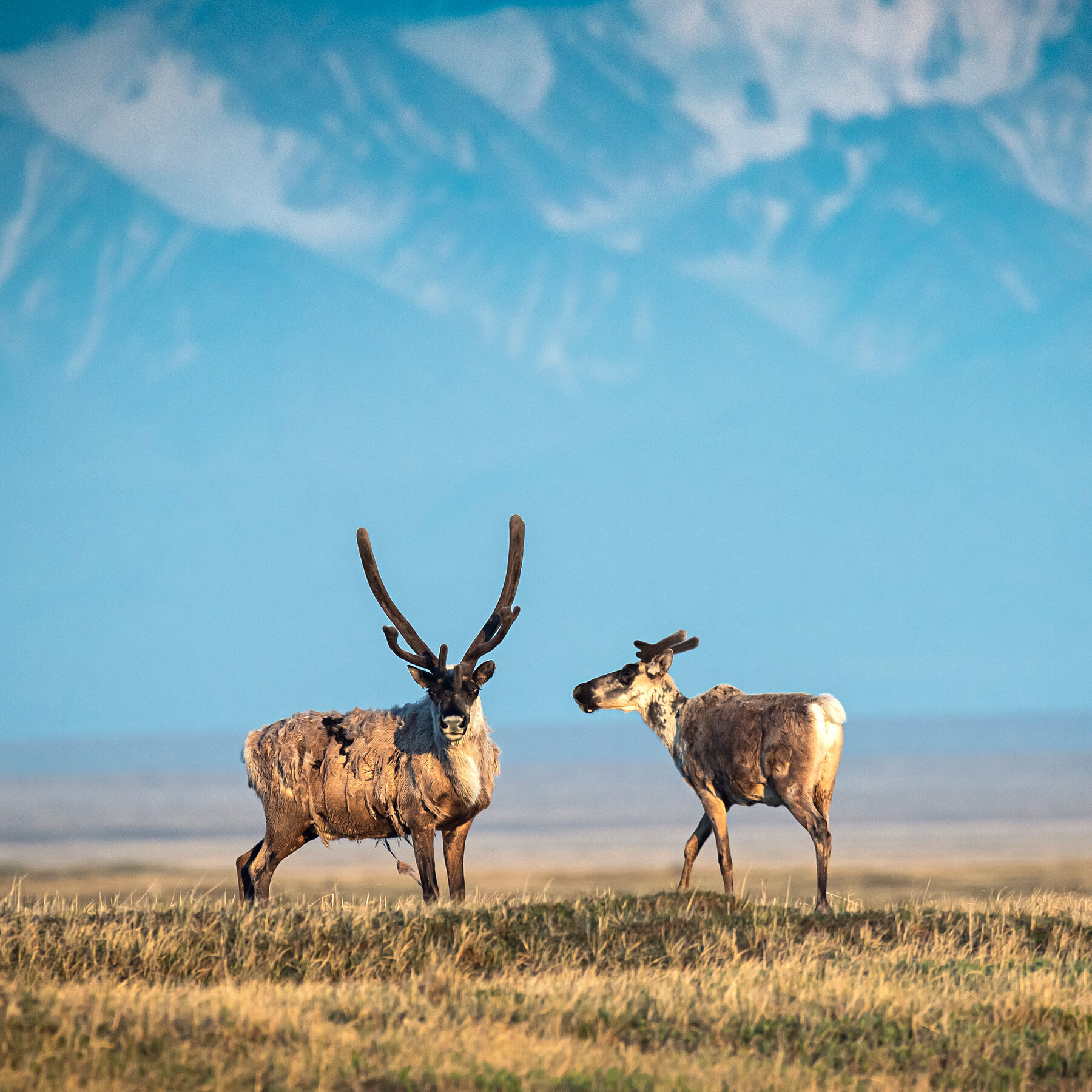
  1. ANWR Oil Draws Few Bids, Despite Trump’s Push for ‘Liquid Gold’
    #1 Score 77
    ANWR Oil Draws Few Bids, Despite Trump’s Push for ‘Liquid Gold’

    An auction to drill in the Arctic National Wildlife Refuge ended with just 10 percent of the available land claimed for oil development.

    NYT Science 3 days ago
  2. NASA Announces Winners of 2026 University Innovation Competition
    #2 Score 69
    NASA Announces Winners of 2026 University Innovation Competition

    NASA announced the Massachusetts Institute of Technology project, Exploration-Class Lunar Integrated Power SystEm, as the first place winner for the 2026 Revolutionary Aerospace Systems Concepts – Academic Linkage (RASC-AL) competition, which challenges students to bridge gaps in aerospace technology by innovating new system concepts and prototypes. Another team from the same university won second place overall for their project, Mars Exploration Layered Infrastructure for Operations, Research, and Advancement, while Virginia Polytechnic Institute and State University took third place with the Mars […]

    NASA Breaking News 3 days ago
  3. NASA’s Artemis II Moon Mission Research Continues on Earth
    #3 Score 59
    NASA’s Artemis II Moon Mission Research Continues on Earth

    Since NASA’s Artemis II crew members safely splashed down in the Pacific Ocean on April 10 after their record-setting mission around the Moon, science teams have been busy collecting more data and combing through observations collected on the test flight. Results from these science investigations will help support safe human exploration of deep space and […]

    NASA Breaking News 3 days ago
  4. #4 Score 56
    AI-designed universal coronavirus vaccine passes first human trial

    Scientists have successfully tested an AI-designed universal coronavirus vaccine in humans for the first time, finding it to be safe and well tolerated. The vaccine generated immune responses against multiple coronaviruses, including SARS-CoV-2, SARS, and related bat viruses with pandemic potential. By targeting features shared across an entire virus family, it aims to provide protection even as viruses evolve.

    ScienceDaily 3 days ago
  5. Leaks on Space Station Lead Astronauts to Briefly Seek Shelter in Spacecraft
    #5 Score 50
    Leaks on Space Station Lead Astronauts to Briefly Seek Shelter in Spacecraft

    Russian astronauts prepared to make repairs on Friday morning, but after an hour and a half, officials decided no urgent action was needed.

    NYT Science 3 days ago
  6. NASA Concludes Antenna Mishap Investigation, Releases Report
    #6 Score 46
    NASA Concludes Antenna Mishap Investigation, Releases Report

    NASA has completed the investigation into the damage sustained last year at its 70-meter radio-frequency antenna, known as the Deep Space Station 14 (DSS-14), at the Goldstone Deep Space Communications Complex near Barstow, California. The agency has classified the event as a Type A mishap based on the total cost of damages. The antenna will […]

    NASA Breaking News 3 days ago
  7. #7 Score 43
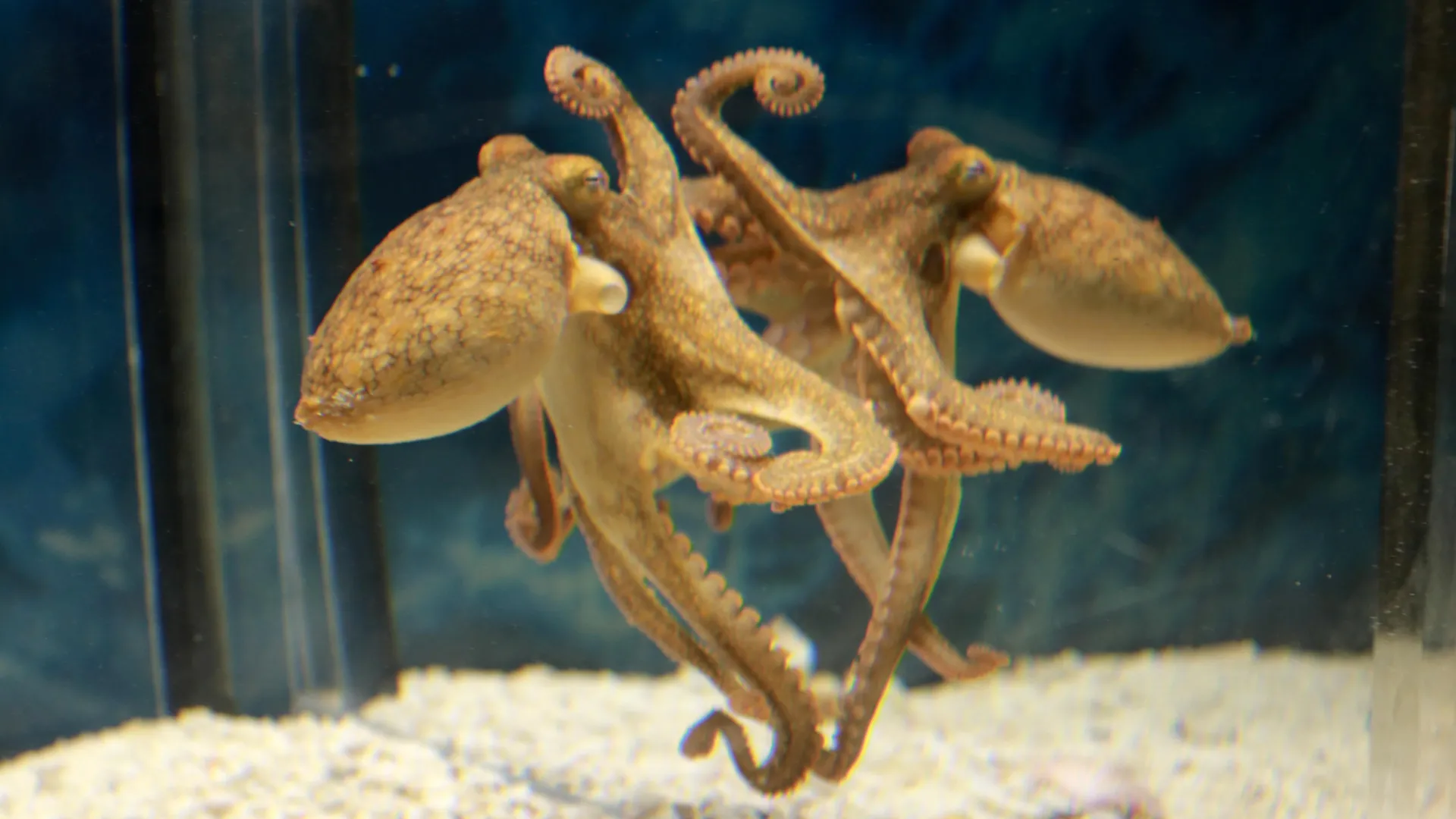
    Octopuses use mirrors to find food they cannot see

    Octopuses may be even smarter than we thought. Researchers at Dartmouth found that octopuses can learn to use mirrors to locate food hidden behind them—a skill previously seen only in vertebrates like mammals and birds. After training, the animals correctly identified the food’s location about 73% of the time, showing they could use a mirror as a tool rather than simply reacting to a reflection.

    ScienceDaily 3 days ago
  8. First Steps: America’s Grueling Second Spacewalk
    #8 Score 40
    First Steps: America’s Grueling Second Spacewalk

    One year after Gemini IV astronaut Edward H. White completed NASA’s first spacewalk the agency prepared for a demanding second excursion. Originally scheduled for Gemini VIII, the extravehicular activity (EVA) was reassigned to Gemini IX-A after that mission ended early, with Gene Cernan taking on the task. On June 5, 1966—the mission’s third day—Cernan exited […]

    NASA Breaking News 3 days ago
  9. #9 Score 33
    Hidden supermassive black hole pairs may finally have a visible signal

    Scientists have proposed a new method for finding tightly bound supermassive black hole pairs by searching for stars that flash repeatedly as their light is magnified by the black holes’ gravity. The timing and brightness of these bursts could provide a unique fingerprint of black holes slowly spiraling toward a future collision.

    ScienceDaily 3 days ago
  10. #10 Score 30
    Magnetic fields may be the secret behind binary star formation

    Scientists have uncovered a surprising force that may help explain how binary star systems form so quickly. New supercomputer simulations show that magnetic fields surrounding newborn stars can act like a cosmic brake, stripping away angular momentum and allowing two still-forming protostars to spiral closer together instead of drifting apart.

    ScienceDaily 3 days ago